
Summer Humidity Wood Furniture Care: Protect Your Solid Wood from Seasonal Swells
By the craftsmen at DD's Custom Woodworks, Kelowna, BC – 18+ years specializing in bespoke live-edge epoxy furniture, river tables, and heirloom-quality solid wood commissions.
The Subtle Shift You've Noticed: Solid Wood Seasonal Movement
If you've ever noticed a drawer that suddenly won't close smoothly, or a tabletop that feels slightly different under your hand in July than it did in January, you've experienced something every piece of solid wood furniture deals with: seasonal movement.
Wood is hygroscopic, meaning it absorbs and releases moisture from the air around it, and summer humidity is when that movement is most noticeable.
Here's the thing — this isn't a flaw. It's just how solid wood behaves, and understanding it is the difference between panicking over a sticky drawer and knowing exactly what's going on.
Why It Happens: Decoding Solid Wood Seasonal Movement
As humidity rises, wood fibers absorb moisture and expand slightly across the grain. A tabletop might swell by a fraction of an inch from edge to edge. A drawer that fit perfectly in the dry winter air can suddenly feel snug. This is normal, expected, and — if the piece was built correctly — accounted for in the construction. It's one of the reasons we build with breadboard ends, floating panels, and proper seasonal wood movement allowances rather than gluing everything rigid. A well-built piece is designed to move without cracking or warping.
Summer Humidity Wood Furniture Care: Proven Habits to Protect Wood Furniture from Humidity
What you can do this summer. A few simple habits go a long way:
- Keep humidity as stable as you can. Big swings are harder on wood than consistently high or low humidity. If your home has a dehumidifier or your HVAC system regulates humidity, running it consistently helps more than cranking it on and off.
- Avoid placing furniture directly against exterior walls or in direct window sun where temperature and moisture swings are most extreme. A few inches of clearance from an exterior wall lets air circulate and reduces the stress on the wood.
- Don't force a stubborn drawer. If a drawer is sticking, wait it out or lightly wax the runners rather than sanding it down mid-summer — the fit will often ease back once humidity drops in the fall, and you don't want to remove material that's needed once the wood contracts again.
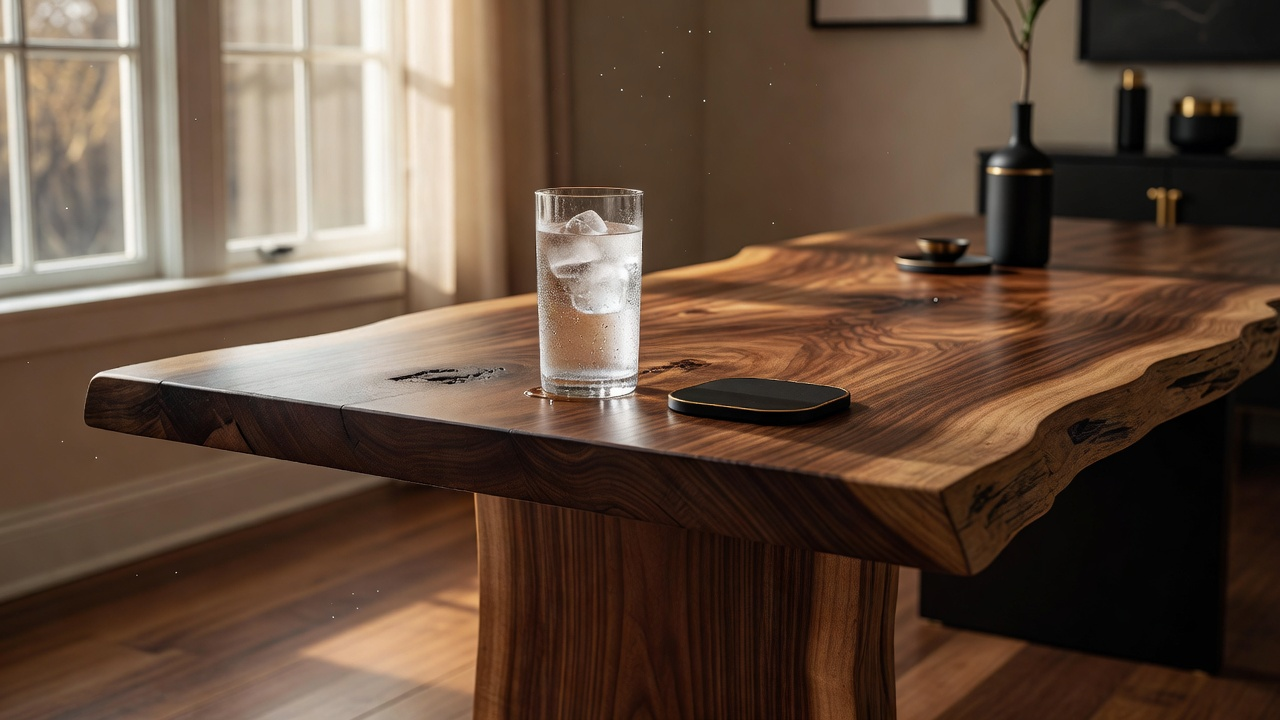
- Wipe up standing water immediately. Condensation from a cold glass, a spilled drink, or a damp vase can cause localized swelling and, over time, finish damage. A coaster and a quick wipe-down are cheap insurance.
- Reapply oil or wax finishes seasonally if that's how your piece was finished. Oiled finishes (like the ones we use on a lot of our dining tables) benefit from a light refresh once or twice a year, and early summer is a great time to do it before the humid months set in fully.
Bespoke Wood Furniture Care: When to Actually Worry
Minor movement — a slightly snug drawer, a faint seam line on a breadboard end — is normal and self-corrects with the seasons. What's worth a call to us is cupping across an entire panel, a crack that's opened up and isn't closing back, or a joint that's visibly separated. Those are signs worth having a look at, and we're always happy to take a look at anything we've built for you.
The Bottom Line on Live Edge Furniture Maintenance and Seasonal Care
The short version: your furniture is doing exactly what solid wood is supposed to do. A little seasonal care keeps it looking and functioning its best for the decades it's built to last.
