
How to Choose a Live Edge Epoxy Table: Wood Species, Size & Finish Guide
By Darren Dyck, Founder of DD's Custom Woodworks, Kelowna, BC
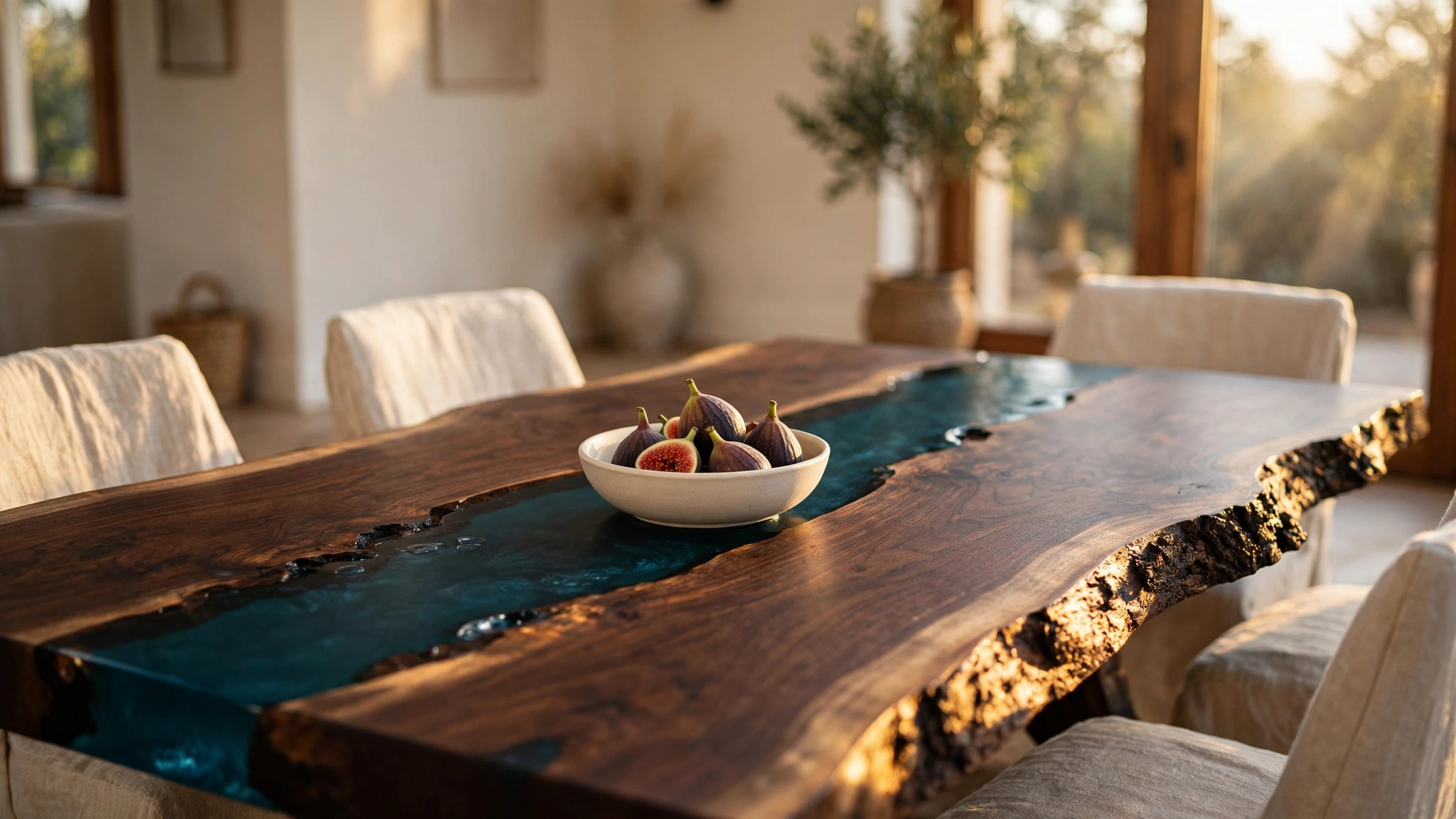
Picture your dining room on a quiet Sunday evening. A mass-produced table dominates the space, its uniform surface reflecting nothing but indifference. Plates clatter without rhythm. Conversations fade into the bland backdrop. Now envision that same room transformed. A live edge epoxy table anchors the heart of the home. The wood's natural edge curves like a riverbank, grain patterns swirl with stories from ancient forests, and a shimmering epoxy river flows between slabs. Laughter rises. Meals linger. This is the pull of a bespoke piece from DD's Custom Woodworks—artisanal craftsmanship in every grain.
Mass furniture lacks soul and stands up poorly to real life. Yet choosing the right live edge epoxy table feels overwhelming. Slabs vary wildly. Epoxy colors shift in different lights. Sizes mismatch rooms. This guide simplifies it. Focus on three key decisions: wood species, table size, and finish options. Master these, and you walk into a consultation ready to commission your heirloom with confidence.
Why Wood Species, Size, and Finish Drive Your Table's Success
Pinterest inspires, but real rooms demand precision. Wood sets the mood and patina over decades. Too dark in a tight space, and it overwhelms. Size dictates flow—cramped chairs kill dinners. Finish faces heat, sun, spills. Get these right, and your epoxy river table thrives for generations. At DD's Custom Woodworks, with over 18 years crafting luxury elements for custom homes through Rutland Contracting, we guide discerning homeowners, designers, and business owners through these choices daily.
Selecting the Perfect Wood Species for Your Epoxy River Table
Wood breathes life into your live edge epoxy table. Each species pairs with room vibes and epoxy hues. Bring photos of your space—walls, floors, light—to match accurately. Studio shots deceive; dark walnut glows in sunlit rooms but broods in dim ones.
Black Walnut
Deep chocolate tones and dramatic grain suit modern, moody formal dining rooms. Hard and stable, it resists dents. Pair with teal, amber, or clear epoxy for contrast. Ideal for statement dining tables.
Maple
Light cream hues keep Scandinavian or bright kitchens airy. Its hardness handles daily traffic. Clear or smoke-tinted epoxy highlights the clean lines.
White Oak
Warm tan with bold rays fits traditional, farmhouse, or transitional offices. Stable and durable. Amber or clear epoxy warms it further.
Cherry
Pinkish-brown richens to reddish over time, perfect for classic interiors. Medium hardness, good stability. Clear epoxy lets the evolution shine.
Elm
Rare interlocked grain creates wild patterns for sculptural live-edge pedestals. Bolder movement needs careful seasoning. Custom rivers in cobalt pop.
Reclaimed Wood
Patina from history—checks, nail holes—for lodge or industrial cabins. Varies by source. Smoke or clear epoxy honors the scars.
Sizing Your Live Edge Dining Table for Real Room Flow
Measure twice. Leave 36 inches around for walkways. Dining tables run 36–42 inches wide for elbow room; lengths match seats—72 inches seats 6, 96 inches seats 8. Coffee tables proportion to sofas: 18–20 inches high, half the sofa length. Conference pieces stretch 10 feet plus for boardrooms.
Slab thickness (1.5–3 inches) adds presence; longer slabs hike price. Base on household reality, not showrooms. Smaller accent tables start at $1,500–$3,000 CAD; dining up to 8 feet, $3,500–$6,000; larger from $6,000+. Quotes customize post-consult.
Epoxy Options: River Styles, Colors, and Lasting Clarity
Narrow epoxy rivers between live-edge slabs dominate dining commissions. Full flood-coats encase slabs for bold conference impact. Clear reveals wood; tints like teal (as in our Teal River Pedestal Table), amber, cobalt, or smoke tailor to rooms.
UV-stable, slow-cure epoxy prevents yellowing—budget resins fail fast. Deep pours over 1.5 inches demand layered, degassed applications in controlled temps. Handcrafted excellence ensures glass-like depth.
Finish and Care for Your Live Edge Epoxy Table
We deliver gloss-polished epoxy and wipe-on polyurethane or hardwax oil on wood edges. Clean with microfiber and mild dish soap. Skip abrasives, ammonia, vinegar. No hot pans on epoxy. Limit direct sun. Keep indoor humidity 35–55%—see our summer humidity care guide. Buff light scratches; deeper ones, contact us. Re-oil wood yearly.
Addressing Common Concerns Head-On
Heirlooms outlast mass pieces that warp or chip in five years. Our UV systems stay clear. Wood moves seasonally—proper seasoning minimizes it. Limited commissions mean 6–10 week timelines; start with ready pieces like the Amber River Coffee Table. Full customs demand consultation.
Your Screenshot-Ready Decision Checklist
- Room photos (light, floors, walls).
- Wood shortlist (e.g., walnut for moody dining).
- Seat count, dimensions (36" walkways).
- River vs. flood-coat.
- Epoxy color (clear/teal from room match).
- Finish sheen (gloss standard).
- Timeline (6–10 weeks custom).
Download our free Live-Edge Epoxy Table Buyer's Guide for more.
Ready for your table? A 20-minute chat about your room, slab, and finish prevents mismatches. Request a quote or call me, Darren, at (236) 457-5689. Visit finished pieces now. At 328 Hartman Avenue, Kelowna, we craft what endures.
